

How Do Two Way Radio Repeaters Work?
Tegan HarrisTerrain, buildings and distance can weaken two-way radio coverage. A repeater can extend useful coverage by receiving a signal and retransmitting it from a well-placed site, provided the radios are compatible and the frequencies and site are authorised. Harris Race Radios advises on repeater systems for NZ and AU motorsport applications.
What Is a Radio Repeater?
A typical repeater receives on an input frequency and retransmits on a separate output frequency. User radios are programmed for that pair, so they can reach other users via the repeater. A high antenna can improve line-of-sight coverage, but no installation guarantees every location.
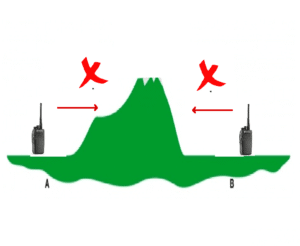
How Does a Digital Repeater Work?
Compatible Motorola DMR equipment can relay digital calls through a repeater. Depending on model, configuration and authorisation, features can include two time slots, talk groups and improved usable audio near the edge of coverage. Do not assume encryption, capacity or a frequency is available on every radio or licence. Compare UHF and VHF for off-road use based on your site and operating permissions.
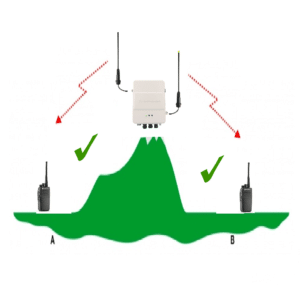
Where Are Repeaters Used?
- Motorsport events needing coverage beyond direct pit-to-car range
- Off-road racing in hilly or forested NZ and AU terrain
- Suitable authorised commercial radio networks across larger sites
Emergency-service networks have their own equipment and authorisations; a motorsport repeater does not grant access to them.
Planning an Installation
Some systems use a duplexer and one antenna; others use separate transmit and receive antennas. The right layout, separation and filtering depend on the frequencies, site and equipment. Antenna location, cable loss, power supply, coverage survey and interference control matter more than a universal mounting distance. Work with an appropriately qualified radio engineer and confirm the site and frequency permissions first.
Do You Need a Repeater?
If direct communications reliably cover your team, a repeater can add complexity without benefit. For persistent coverage gaps, start with a site survey, antenna check and channel/licensing review. Call Rex on 021 682912 or Aaron on +64 27 449 9654 with your event and terrain details.
Related Guides
- UHF vs VHF for Off-Road Racing
- How to Choose a Race Radio System
- Radio Licence Q&A
- Motorsport Radio Systems
- Complete Radio Kits
- Noise-Cancelling Headsets
About the Authors
Rex Harris is a qualified Radio Telecommunications Engineer and Approved Radio Certifier for NZ RSM and AU ACMA, with motorsport radio experience dating to 1975. He can discuss radio engineering, programming and the applicable authorisation process; his radio qualification does not certify helmets or other safety gear.
Aaron Harris is an active racing driver, race engineer and MotorSport NZ Licence Examiner. His licence-examiner role concerns licences, not examination or certification of helmets, racewear, FHR or HANS devices.
Harris Race Radios supplies motorsport communications equipment in NZ and AU. Confirm compatibility and permissions for your particular site.