

Analog v Digital 2 Way Radios
Tegan HarrisDigital 2-way radios are gaining in popularity over their analog counterparts, for good reason. Let's explore the differences between analog and digital 2-way radios, especially as they apply to motorsport racing applications.
How They Work
Both analog and digital radios send signals over a radio channel using a carrier frequency wave — either VHF or UHF. However, the way the transmission is encoded over a channel frequency is different.
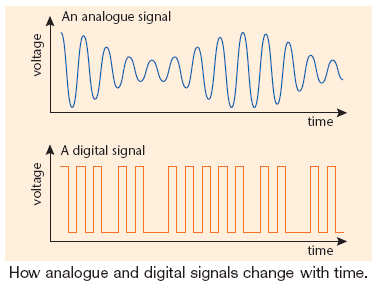
Analog radios use frequency modulation (FM) to encode a voice signal within a carrier wave. Your voice changes, or modulates, the frequency of the wave. The difference between the modulated frequency and the baseline channel frequency is then demodulated by the receiving radio and turned back into a voice message.
Digital radios do the same thing, but with an extra encoding step. The voice message is encoded into binary packets (ones and zeroes), which then modulate the frequency of the carrier wave. The modulated frequency of a digital signal is not a continuous wave but an intermittent stepped change.
Feature Comparisons
Voice Quality
Digital radios far surpass analog when it comes to voice quality. Analog radios transmit every noise picked up by the microphone, allowing background noise to drown out the voice message. Digital reception focuses on the voice message and ignores RF interference, resulting in exceptional voice clarity. Digital radios can also rebuild voice sounds using auto error correction if a signal is badly corrupted. In racing, audio quality is critical — you don't have time to repeat a garbled message.
Coverage
While both a 5-watt analog and digital radio will transmit over the same distance, the digital radio remains loud and clear all the way to the edge of coverage, whereas the analog radio gradually fades and garbles the further out it goes.
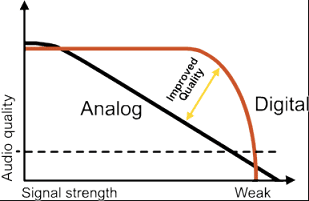
This clarity makes digital radios great for short course racing, but for longer desert races you may want to consider analog for its raw range.
Battery Life
In standby mode, both consume about the same power. But once transmitting, digital radios are significantly more efficient — the intermittent packet transmission means the radio is only using power intermittently. A digital radio battery can last up to 40% longer than analog. For drivers in the seat for 8 or more hours, this matters.
Channel Capacity
With analog radios, a single conversation takes up the entire channel bandwidth. Digital radios are extremely efficient with channel bandwidth, effectively doubling the capacity of a single channel. More people can communicate on a single channel without interference — less radio traffic when you have an urgent message to transmit.
Are Analog and Digital Compatible?
No. An analog radio cannot transmit or receive a digital signal. However, many digital radios can be switched to analog mode, allowing a gradual transition without making older analog radios obsolete. Digital is the future of two-way radios, but always consider your specific application when justifying the additional cost.
Need Advice?
Call Rex on +64 21 682 912 or Aaron on +64 27 449 9654, or contact us online for advice on the right radio system for your motorsport or commercial application.