

FHR Frontal Head Restraint & HANS Devices — NZ & Australia Guide
Tegan HarrisA frontal head restraint (FHR) — commonly known as a HANS device — is one of the most important pieces of safety equipment a motorsport driver can wear. Required under MSNZ and Motorsport Australia regulations for many categories, FHR devices dramatically reduce the risk of basilar skull fracture in a frontal impact by preventing the head from whipping forward relative to the body.
Harris Race Radios supplies and fits FHR devices to competitors across New Zealand and Australia, with expert advice from Aaron Harris and Rex Harris — both active in MSNZ-sanctioned motorsport.
What Is a Frontal Head Restraint (FHR)?
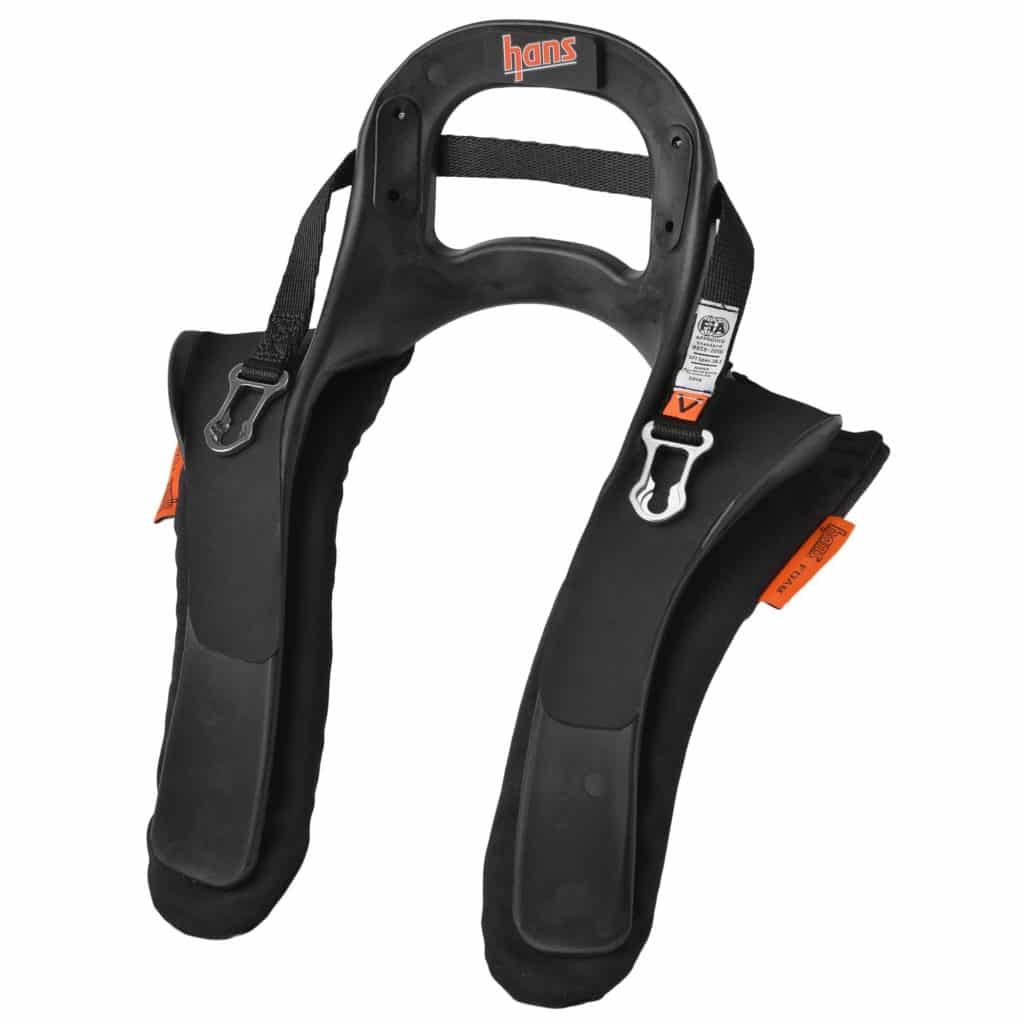
Stand21, as the original manufacturer of HANS-style neck brace devices, established the category and remains the most widely used brand in FIA and MSNZ-regulated motorsport. FHR devices attach to the helmet using tethered posts and are held in position by the driver's racing harness. Their purpose is to limit the forward and rotational movement of the head during a crash, reducing the load on the neck and base of the skull.
All FHR devices approved for use in MSNZ and Motorsport Australia events carry either FIA 8858 or SFI 38.1 homologation. Always check your category's specific regulations before purchasing.
How Does an FHR Device Work?
The device sits on your shoulders and chest, held in place by your harness straps. Tethers connect the device to anchor posts on either side of your helmet. In a frontal impact, as the body decelerates rapidly, the tethers limit how far the head can travel forward — transferring load to the torso rather than the neck vertebrae and skull base.
The geometry of your harness is critical to correct FHR operation. Stand21 recommends a three-inch shoulder harness for optimal load distribution, though dedicated two-inch HANS harnesses are also available. Fitting instructions are supplied with every device.
HANS Device Sizing
FHR devices are sized by the angle of the yoke (20°, 30°, or 40°) and the width of the device. The correct angle depends on your seating position — more reclined seats typically require a higher angle. Sizing is also affected by your shoulder width and the type of racing you do (circuit, rally, off-road).
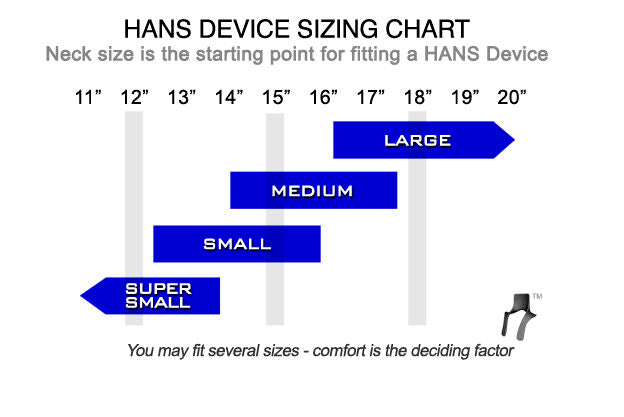
If you're unsure which size or angle suits your car and seating position, contact Aaron or Rex at Harris Race Radios — we can advise based on your specific setup.
FHR Device Models — What's the Difference?
Stand21 offers several models differentiated primarily by material and weight:
- Carbon fibre models — lightest, preferred for professional and high-level club racing where driver weight matters
- Hybrid (carbon/composite) models — mid-weight, excellent strength-to-weight ratio, popular for club and endurance racing
- Composite models — heavier but more affordable, suitable for entry-level and occasional competitors
All models feature ergonomic chest yokes with soft Nomex padding for comfort during long stints. The padding is air-fillable for a custom fit.
For a full comparison of HANS, Simpson Hybrid, and Neckgen devices, see our FHR comparison guide.
Regulations — NZ & Australia
FHR devices are mandatory in many MSNZ and Motorsport Australia categories, particularly for circuit racing, rally, and hillclimb. Requirements vary by category and car age — check your specific category regulations or ask us if you're unsure what's required for your class.
Related Safety Equipment
An FHR device works as part of a complete safety system. Browse our related guides and products:
Get Expert Advice
Harris Race Radios stocks FHR devices for competitors across New Zealand and Australia. Call Aaron on +64 27 449 9654 or Rex on +64 21 682 912 for advice on the right device for your car, category, and budget. We ship throughout NZ and AU with fast turnaround.
Harris Race Radios — Motorsport Safety & Communications Specialists | New Zealand & Australia