How Helmet Air Systems Work: Airflow, Dust & Fitment
Treat helmet air as a complete airflow path
A helmet-air setup connects an air source to a compatible helmet intake. The source, filter, hose, couplings and helmet duct all affect how the installation works. Choose them together rather than assuming that a top-air duct alone is a complete system.
In speedway and off-road racing, filtered airflow has an important dust-control role alongside driver comfort. Circuit and endurance drivers can combine helmet air with liquid cooling and hydration. This guide explains the principles; shop the helmet duct range for individual equipment and exact fitment.
Air sources | Helmet fitment | Installation | Troubleshooting | Related knowledge
Pumper, NACA feed or refrigerated air?
Filtered air pumper
A powered pumper draws air through its specified filter and supplies it through a hose to the helmet intake. Suitable filtered airflow helps reduce dust entering a correctly configured helmet. A pumper moves air; it does not refrigerate it. Air-source temperature, filter condition, hose restrictions and the helmet arrangement all matter.
Browse Rugged helmet air pumpers and accessories. Harris Race Radios™ is an Australasian distributor for Rugged Radios and PCI; ask us to match the source and connection arrangement to the installation.
NACA or other external air feed
An external duct collects air for an installed hose or ventilation path. Its location, orientation and the car's airflow affect supply. Do not assume a passive feed delivers the same airflow when stationary as it does at speed, or that any convenient position provides clean air. Keep intakes away from exhaust, fuel vapours and other contamination sources.
Refrigerated helmet air
Equipment designed to chill an air supply is different from an ordinary pumper and from a liquid-cooling shirt system. Check the exact unit's intended use, power, ducting and installation instructions. A liquid-cooling unit does not automatically provide refrigerated helmet air.
A particulate filter is not protection against exhaust gases or carbon monoxide. Helmet airflow is not a substitute for a safe air source or correcting an exhaust or cockpit-contamination problem. Do not rely on airflow alone to make an unsafe cockpit safe.
Match the duct to the exact helmet
Top-air ducts use a helmet-specific vent arrangement or intended attachment method. Shell shape, model generation, intake position and the required hose connection all need checking. Brand alone is not enough: a duct intended for one model is not automatically suitable for another.
Antman top-air example
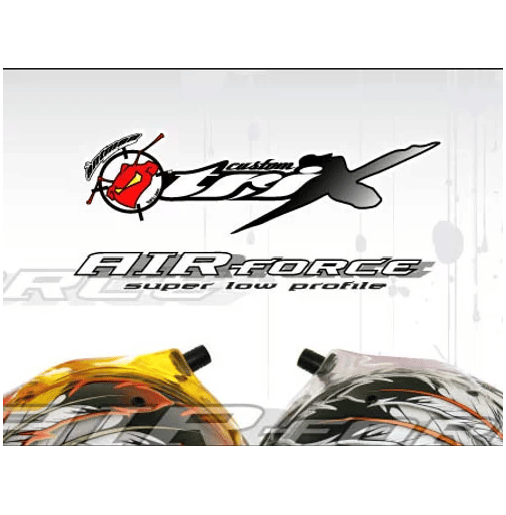
Use the exact Antman product listing and instructions to confirm helmet vent-pattern fitment, attachment method and whether the hose connector is supplied separately. Do not apply an older model's fitment or connector dimensions to every Antman duct.
Stilo top-air example

Stilo has different intake and modular top-air arrangements. Match the exact part number, helmet model and connection required; regulated-airflow, fixed-airflow and Maglock-equipped parts are not interchangeable descriptions of one universal kit. Check the product's included parts rather than assuming the hose, coupling and air source are included.
Browse Stilo hydration and top-air components and Maglock helmet-air couplings. Hydration parts and air parts have separate jobs even when they appear within the same collection.
External ducting examples


These retained manufacturer illustrations provide context, not a guarantee that every pictured component is included or compatible with your setup. Check the current exact product specification before ordering.
Install around the driver, communications and exit route
- Confirm the helmet attachment. Follow the helmet and duct manufacturers' instructions. Do not drill, cut or modify the shell or protective lining to make an unsuitable duct fit.
- Choose the air source and intake position. Follow mounting, power and filter requirements. Consider dust loading, hot air and contamination, not just available space.
- Match hose and couplings. Confirm the intended sizes and mating parts at both ends. A magnetic air coupling does not establish universal helmet compatibility or compatibility with drink or liquid-cooling connections.
- Route without restrictions or snag points. Avoid sharp bends, crushing, abrasion and hot components. Allow the driver to move their head while keeping the hose clear of controls and harness adjustment.
- Check the complete driving position. Test with the seat, harness, head-and-neck restraint, helmet, radio wiring, drink tube and cooling hoses in their normal configuration.
- Practise disconnection and exit. Establish how each connection releases during a driver change and emergency exit. Do not assume every coupling automatically separates under load.
What helmet air can and cannot promise
Filtered air can support dust reduction and comfort, but results depend on the whole installation and conditions. Do not assume it creates a sealed respiratory-protection system, guarantees visor demisting, prevents heat illness or makes a driver faster. A filter cannot compensate for an unsafe air source.
Helmet air, liquid garment cooling and hydration can be complementary rather than competing choices. The helmet still needs to suit the driver's discipline, head shape, fit, communications and applicable requirements. Check the exact helmet label and current category and event rules when selecting protective equipment.
Check problems systematically
| Problem | Practical checks |
|---|---|
| Weak airflow | Check filter condition, hose kinks, blocked ducting, coupling engagement and the manufacturer's installation requirements. For powered units, check the specified electrical supply and controls. |
| Air feels too warm | Check where the intake draws air and whether hot surroundings are affecting the supply. Remember that an ordinary pumper does not refrigerate air. |
| Dust continues to enter | Inspect the specified filter, connections and helmet arrangement. Consider intake location and changing dust conditions. Do not improvise a helmet seal or modify protective equipment. |
| Hose pulls on the helmet | Review the hose route and supported length with the driver correctly restrained. Check full required head movement and the release arrangement. |
| Persistent visor misting | Check the helmet's intended ventilation and visor setup and the air path. Seek model-specific advice rather than assuming more pump output solves every cause. |
| Exhaust smell or suspected contamination | Stop and investigate the source. A particulate filter does not make exhaust-contaminated air safe. |
Care before and after the event
Inspect the filter, hose, duct attachment and couplings before use. Clean or replace components according to their specific instructions; do not wash a filter unless its manufacturer permits it. After a dusty event, inspect again rather than waiting for noticeable airflow loss. Keep stored parts clean and dry as specified.
Related knowledge and equipment
Read How Driver Cooling Works: Heat Transfer and Troubleshooting for liquid cooling, heat-management context and the relationship between methods. Use our motorsport driver hydration guide for drinking-system routing, driver changes and cleaning.
For equipment selection, browse forced-air helmet ducts, Rugged helmet-air equipment, Maglock connections and the wider driver cooling, hydration and helmet-air range.
Ask Harris Race Radios™ for a matched setup. Include your helmet make and model, racing discipline, car, existing air source, hose and coupling details. Our helmet, communications, installation and repair experience helps keep the complete driver system practical.